The taxonomical structure of the Fungarium YSU represented by about 1800 species, 600 genera, and 200 families. The majority of the specimens in the YSU Fungarium belong to the Basidiomycota (about 86%), less to Ascomycota (12%) with few specimens from Zygomycota and Myxomycota.
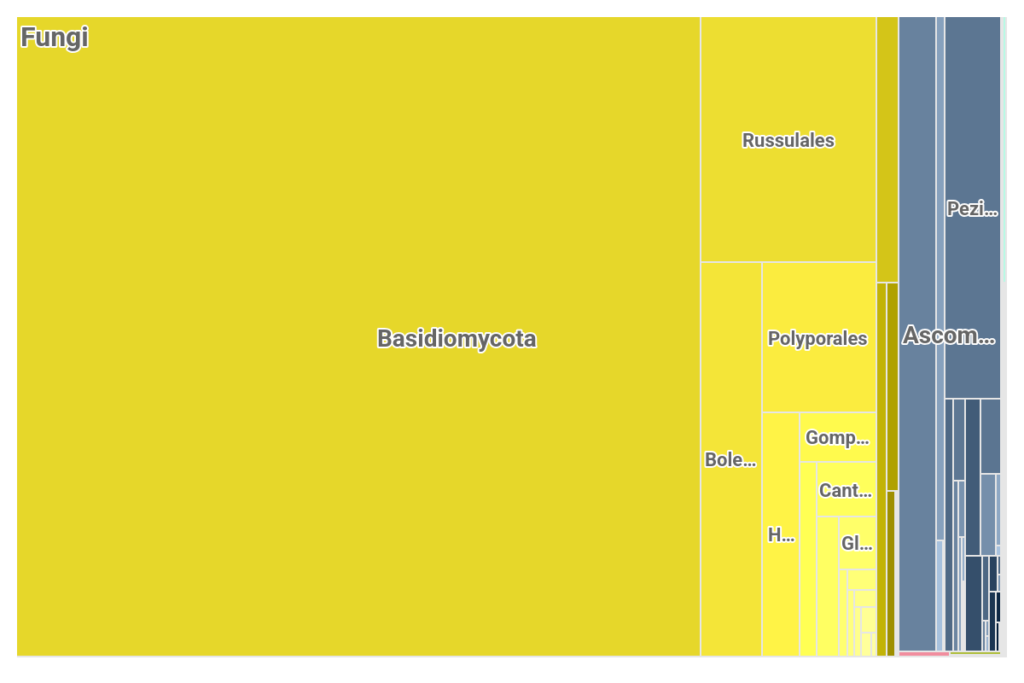
The largest classes are the Agaricomycetes (85%), Leotiomycetes (5%), and Pezizomycetes (4%); the other 15 classes are represented by less than 100 specimens. A total of about 70 orders are represented, with majority specimens from Agaricales (70%), Russulales (6%), Polyporales (4%), Pezizales (4%) and Boletales (4%), and other orders less represented.
The specimens of Fungarium YSU belong to about 200 families, of which 19% and 6% belong to the families Cortinariaceae and Hymenogastraceae, respectively. They are followed by Mycenaceae, Russulaceae, Inocybaceae, Strophariaceae, Tricholomataceae, Agaricaceae, Entolomataceae, Pluteaceae, Hygrophoraceae, Omphalotaceae, Amanitaceae, Psathyrellaceae, Lycoperdaceae with the rest of families representing less than 2%.
The collection includes about 600 genera, notably being Cortinarius (2500 specimens), Mycena (600 specimens), Russula (450), Entoloma (414), Galerina (402), and Pluteus (396), other genera represented by less than 2% specimens.
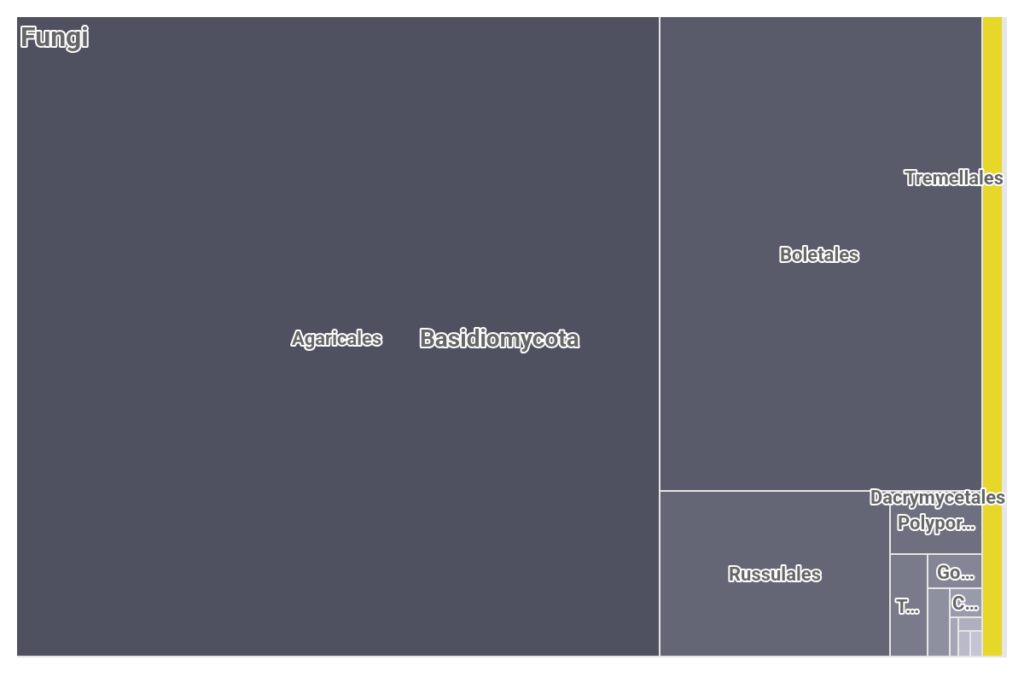
The taxonomical structure of the Fungarium of Elena Zvyagina represented by about 650 species, 200 genera, and 70 families. The majority of the specimens in the YSU-EZ collection belong to the Basidiomycota. The largest classes are Agaricomycetes (97%). The largest orders are Agaricales (61%), Boletales (25%), Russulales (5%). The largest families are Suillaceae, Cortinariaceae, Lycoperdaceae, Entolomatacea, with others less than 4%. The collection includes 200 genera, notably being Suillus (439), Cortinarius (422), Entoloma (165), Laccaria (137), Lycoperdon (126 specimens).
Last update 16/01/2026