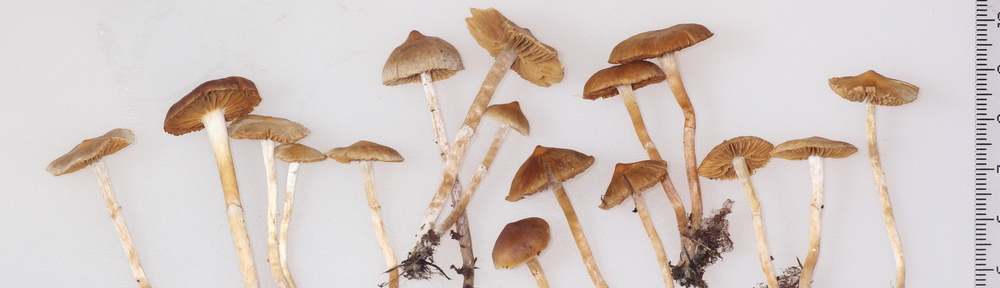
Nina Vladimirovna Filippova Extended Curriculum Vitae
- Scopus
- WoS Research ID
- ORCID
- eLibrary AuthorID
- Facebook profile
- ВКонтакте страница
- GoogleScholar publications
- ResearchGate profile
- CoLab profile
- LeaderID
PERSONAL INFORMATION
| Full Name | Nina Vladimirovna Filippova |
| Gender | Female |
| Date & Place of Birth | 27 March 1984, Novosibirsk, Russia |
| Citizenship | Russian Federation |
| Languages | Russian (native), English (intermediate) |
| ORCID | 0000-0002-9506-0991 |
| Scopus Author ID | 56896932100 |
| eLibrary ID | 787080 |
| n_filippova@ugrasu.ru | |
| Website | https://fungariumysu.org/ |
CURRENT POSITION
| Period | Position |
| 2025–present | Associate Professor, Head of Mycology and Mycotechnology Laboratory, High Ecology School, Yugra State University |
| 2021–2025 | Head of Molecular Laboratory, Yugra State University |
EDUCATION
| Year | Degree | Institution |
| 2016 | PhD in Biological Sciences | Central Siberian Botanical Garden, Novosibirsk |
| 2010 | PhD coursework (Geoecology) | Yugra State University |
| 2007 | MSc in Botany | Tomsk State University |
| 2005 | MSc in Biology | Tomsk State University |
PhD Thesis: Fungal Communities of Raised Bogs in Middle Taiga Zone of West Siberia
CAREER HISTORY
| Period | Position |
| 2007–2017 | Senior Engineer, Environmental Dynamics and Global Climate Change UNESCO Chair, Yugra State University |
| 2017–2021 | Senior Researcher, Environmental Dynamics and Global Climate Change UNESCO Chair, Yugra State University |
| 2021–2025 | Head of Molecular Laboratory, Yugra State University |
| 2025–present | Associate Professor, Head of Mycology and Mycotechnology Laboratory, High Ecology School, Yugra State University |
RESEARCH DIRECTIONS
1. Fungal Communities of Peatland Ecosystems
- Long-term monitoring of macrofungi in raised bogs (since 2014) — один из самых длительных рядов наблюдений за макромицетами на болотах России
- Community composition, phenology, and dynamics
- Substrate partitioning and hidden biodiversity
- Metabarcoding of fungal communities in peatlands
2. Biodiversity Informatics & Data Mobilization
- Development of fungal literature-based occurrence databases for Western Siberia (FunWS)
- Over 30,000 fungal occurrence records published in GBIF
- Digitization and publication of biological collections
- GBIF data publishing and FAIR principles
- Specify database management and web portals
- Created regional GBIF node with IPT and Specify information system (2018)
3. Molecular Mycology
- DNA barcoding of fungal collections (Sanger sequencing)
- Metabarcoding of fungal communities (Illumina MiSeq, Nanopore MinION)
- Development of molecular laboratory infrastructure (2021–present)
- Protocols for DNA extraction, PCR, sequencing, and data analysis
- Trained a team of young researchers in molecular methods
4. Mycorrhizal Biotechnology
- Collection of native ectomycorrhizal fungal strains
- Development of mycorrhizal preparations for reforestation
- In vitro mycorrhization experiments (rhizotron systems)
- Strain cultivation and formulation development
5. Fungal Systematics & Taxonomy
- Revision of genus Cortinarius in Western Siberia (624 barcoded specimens, 212 species)
- Revision of genus Laccaria, Entoloma, and other groups
- New species descriptions (Stamnaria yugrana, Hohenbuehelia incrustata, Micropeziza curvatispora)
- Cryptic speciation studies (Gyromitra complex)
- Total: 5 new species for science described
BIOLOGICAL COLLECTIONS MANAGEMENT
Fungarium of Yugra State University (YSU-F)
- Established: 2016 (Index Herbariorum: YSU)
- Specimens: ~20,000 (fungi, lichens, mosses, vascular plants)
- Fungi: ~13,000 specimens
- Lichens: ~3,000 specimens (YSU-L)
- Bryophytes: ~6,000 specimens (YSU-MH)
- Vascular plants: ~300 specimens (YSU-H)
- Fungal culture collection: ~250 strains (YSU-C)
Key Accomplishments
- Registered as GBIF data publisher (2017)
- Fully digitized collection in Specify 7
- Online portals: Specify Web Portal, Mycoportal
- ~1,000 DNA barcodes added to specimens
- Living culture collection of 82 ectomycorrhizal strains (2025)
- Created regional node for publishing data in GBIF (IPT and Specify information system, 2018)
- Since 2020, leads the initiative to digitize literature data on fungal occurrences in Northern and Southern West Siberia — resulting in a database with over 30,000 occurrence records exported to GBIF
MAJOR RESEARCH PROJECTS
1. Fungal Literature Records Database of Western Siberia (FunWS)
- Period: 2019–present
- Scope: ~42,500 fungal occurrences from ~150 publications
- Coverage: Northern and Southern West Siberia
- Output: Two GBIF datasets, two Data Papers in Biodiversity Data Journal
- Filippova N, Arefyev S, Zvyagina E, et al. (2020) Fungal literature records database of the Northern West Siberia (Russia). Biodiversity Data Journal 8: e52963.
- Filippova N, Ageev D, Bolshakov S, et al. (2021) The fungal literature-based occurrence database for southern West Siberia (Russia). Biodiversity Data Journal 9: e76789.
2. Long-term Monitoring of Terrestrial Macrofungi
- Period: 2014–present
- Plots: 10 forest plots (Shapsha) + raised bog plots (Mukhrino)
- Methods: Circular 5 m² plots, weekly visits during vegetation season
- Output: Three GBIF sampling-event datasets, multiple publications
- Filippova N, Lapshina E (2019) Sampling event dataset on five-year observations of macrofungi fruit bodies in raised bogs. Biodiversity Data Journal 7: e35674.
- Filippova N, Bulyonkova T (2017) The communities of terrestrial macrofungi in different forest types in vicinities of Khanty-Mansiysk. Biodiversity Data Journal 5: e20732.
3. Metabarcoding of Peatland Fungal Communities
- Period: 2021–present
- Scope: 285 samples × 4 substrates (peat, litter, wood, mycorrhizal roots)
- Platform: Illumina MiSeq, Nanopore MinION
- Results: ~4,964 species hypotheses, 13 fungal phyla
- Output: GBIF DNA-derived dataset, Data Paper in Biodiversity Data Journal
- Filippova N, Zvyagina E, Rudykina E, et al. (2024) DNA-based occurrence dataset on peatland fungal communities studied by metabarcoding in north-western Siberia. Biodiversity Data Journal 12: e119851.
4. Barcoding of Cortinarius Collection
- Period: 2022–present
- Scope: ~2,500 specimens, 711 sequenced, 624 high-quality sequences
- Results: 212 species, 17% confirmed with type material
- Output: GBIF dataset, SRA archive, manuscript in review
5. Molecular Laboratory Development
- Period: 2021–present
- Support: Ministry of Science and Higher Education of Russia
- Achievements:
- Organized a molecular-genetic laboratory at Yugra State University
- Trained a team of young researchers in molecular methods
- Developed and tested protocols for DNA extraction, PCR, sequencing
- Initiated barcoding of the YSU Fungarium collection
- See results: https://fungariumysu.org/moleculab/results/
6. Mycorrhizal Biotechnology Project
- Grant: Yugra Foundation for Scientific and Technological Development (2024–2025)
- Budget: 7,000,000 RUB
- Results: 82 pure cultures of ectomycorrhizal fungi, 49 taxa
- Output: GBIF culture collection dataset, software certificate, protocols
7. Role of Fungi in Carbon Cycle of Raised Bogs
- Grant: Russian Science Foundation (2024–present)
- Budget: 1,500,000 RUB
- Focus: Linking community composition to decomposition processes
- Results: 92 strains (49 taxa) for functional experiments
GRANTS
| Period | Grant | Role | Title |
| 2024–2025 | Yugra Foundation | PI | Mycorrhizal preparations for bioremediation and climate projects (7,000,000 RUB) |
| 2024–2025 | Russian Science Foundation | PI | Role of fungi in carbon cycle of raised bogs (1,500,000 RUB) |
| 2024–2027 | Federal subsidy (FENG-2024-0003) | PI | Molecular-genetic methods for biodiversity assessment in Northern regions |
| 2021–2023 | Federal subsidy | PI | Metabarcoding for rapid environmental impact assessment |
| 2020–2021 | Governor’s Grant (№20-1-000196) | PI | Mycological Club of Yugra |
| 2020–2021 | Presidential Grant (№20-2-014584) | PI | Coaching in biodiversity data mobilization |
| 2022 | Governor’s Grant (№22-1-000348) | PI | Barcoding for biodiversity (summer school) |
| 2022 | Presidential Fund (№22-1-014206) | PI | Fungal Museum of Yugra — exhibition |
| 2023 | Governor’s Grant (№23-1-000332) | PI | Summer Molecular School for Biologists of Yugra |
| 2021–2022 | RFBR (21-54-15012) | Participant | Temperature effects on Siberian peatlands |
| 2019–2021 | RFBR (18-44-860017) | Participant | Biodiversity and functioning of peatland ecosystems |
| 2015–2018 | RFBR (15-44-00091) | Participant | Peatland ecosystems functioning (UNESCO Chair) |
TEACHING
University Courses (Yugra State University)
| Period | Course | Level |
| 2023–present | Molecular-Genetic Methods in Biodiversity Studies | MSc (1st year) |
| 2022–present | Biodiversity and Ecosystem Services Assessment | BSc (1st year) |
| 2021 | Methodology of Scientific Research | MSc (1st year) |
| 2017–2018 | Mycology and Phytopathology | MSc (1st year) |
| 2017–2019 | General Biology | MSc (1st year) |
Thesis Supervision
| Period | Student | Topic |
| 2018–2019 | Gelmanova Alena | Poisonous fungi of Yugra |
| 2019–2020 | Vlasova Antonina | Edible fungi of Yugra |
| 2019–2020 | Rudykina Elena | Revision of macrofungi diversity in raised bogs |
| 2024–2025 | Popescu Kristina | YSU fungal culture collection |
| 2024–2025 | Lutovinova Victoria | Revision of genus Laccaria in YSU collection |
Professional Development Courses (Organizer & Lecturer)
| Year | Course | Location |
| 2022 | Barcoding for Biodiversity Studies (36 hrs) | Yugra State University |
| 2023 | Summer Molecular School (36 hrs) | Yugra State University |
| 2024 | Molecular Methods in Biodiversity Studies (72 hrs) | Yugra State University |
| 2019–2024 | Various GBIF/Data Mobilization workshops | Multiple locations |
SCIENCE OUTREACH & POPULARIZATION
- Mycological Club of Yugra — organized and led since 2018
- Fungal Museum of Yugra — exhibition on fungal diversity, applied properties, and cultural significance (Presidential Grant, 2022)
- Summer Molecular Schools — organized for young scientists at Mukhrino field station (2022, 2023)
- Barcoding for Biodiversity — week-long course for young scientists (Governor’s Grant, 2022)
- Data Mobilization Coaching — training for scientific and educational organizations in Yugra (Presidential Grant, 2020–2021)
- 4 grant projects for education in mycology, molecular methods, and biodiversity data mobilization (since 2018)
WEB PORTALS (Administrator)
| Portal | URL | Role |
| Fungarium of Yugra State University | https://fungariumysu.org/ | Administrator |
| Biodiversity Data Mobilization Center | https://nwsbios.org/ | Administrator |
| Mukhrino Field Station | https://mukhrinostation.com/ | Administrator |
| Siberian Mycological Society | https://sibmyco.org/ | Co-administrator |
Social Media
- VK: Сибирское Микологическое Общество, Цифровая карта биоразнообразия Югры, Стационар Мухрино ЮГУ
- Facebook: Mukhrino Field Station
PROFESSIONAL SERVICE
Editorial Roles
- Associate Editor: Karstenia
Reviewer
- Environmental Dynamics and Global Climate Change
- Various international journals
Memberships
| Period | Organization |
| 2020–2022 | Taxonomic Databases Working Group (TDWG) |
| 2019–present | European Mycological Association |
| 2018–present | Saint-Petersburg Mycological Society |
| 2019–2021 | SPECIFY Collections Consortium (Associate Member) |
| 2022–2024 | Ascomycota.org |
Other Roles
- GBIF Open Biodiversity Data Ambassador (2019–present)
- Scientific outreach: Siberian Mycological Society
- Student Mycotechnology Club (Yugra State University)
PUBLICATIONS
Total: ~80 publications, including 30 in WoS/Scopus
H-index: WoS – 6, Scopus – 8, RSCI – 10
Selected Publications (2020–2026)
- Filippova N, Zvyagina E, Rudykina E, Ishmanov TF, Filippov I, Bulyonkova T, Dobrynina A (2024) DNA-based occurrence dataset on peatland fungal communities studied by metabarcoding in north-western Siberia. Biodiversity Data Journal 12: e119851.
- Filippova N, Zvyagina E, Rudykina E, Dobrynina A, Bolshakov S (2023) The diversity of macromycetes in peatlands: nine years of plot-based monitoring and barcoding in the raised bog «Mukhrino», West Siberia. Biodiversity Data Journal 11: e105111.
- Filippova N, et al. (2022) Crowdsourcing fungal biodiversity: revision of iNaturalist observations in Northwestern Siberia. Nature Conservation Research 7(Suppl.1): 64–78.
- Miller A, Dirks A, Filippova N, Popov E, Methven A (2022) Studies in Gyromitra II: cryptic speciation in the Gyromitra gigas species complex. Mycological Progress 21(9): 1–13.
- Filippova N, Ganasevich G, Filippov I, Meshcheryakova A, Lapshina E, Karpov D (2022) Yugra State University Biological Collection: general and digitisation overview. Biodiversity Data Journal 10: e77669.
- Filippova N, Ageev D, Bolshakov S, et al. (2021) The fungal literature-based occurrence database for southern West Siberia (Russia). Biodiversity Data Journal 9: e76789.
- Dyukarev E, Filippova N, Karpov D, et al. (2021) Hydrometeorological dataset of West Siberian boreal peatland: a 10-year record from the Mukhrino field station. Earth System Science Data 13(6): 2595–2605.
- Dyukarev E, Zarov E, Alekseychik P, Filippova N, et al. (2021) The multiscale monitoring of peatland ecosystem carbon cycling in the middle taiga zone of Western Siberia. Land 10(8): 824.
- Kwon T, et al. (Filippova N) (2021) Effects of climate and atmospheric nitrogen deposition on litter decomposition across biomes. Frontiers in Forests and Global Change.
- Filippova N, Arefyev S, Zvyagina E, et al. (2020) Fungal literature records database of the Northern West Siberia (Russia). Biodiversity Data Journal 8: e52963.
- Filippova N, Lapshina E (2019) Sampling event dataset on five-year observations of macrofungi fruit bodies in raised bogs, Western Siberia, Russia. Biodiversity Data Journal 7: e35674.
DATA PUBLISHING
GBIF Datasets (Selected)
- DNA-based occurrence dataset on peatland fungal communities: https://doi.org/10.15468/s2pkfk
- Fungal Culture Collection (YSU-C): https://doi.org/10.15468/2jgt8u
- Cortinarius barcoding database: https://www.gbif.org/dataset/…
- Fungarium of Yugra State University (YSU-F): https://doi.org/10.15468/g4bk6h
GenBank/SRA Deposits
- SRA (metabarcoding datasets)
- ~1,000 Sanger sequences deposited
- DNA-derived extension tables published in GBIF
- Zvyagina EA, Filippova NV (2024) DNA extraction, library preparation and sequencing on Nanopore MinION. protocols.io.
- Filippova N, Zvyagina E. Loading sequences into Specify 7 and exporting to GenBank and GBIF. protocols.io.
LABORATORY INFRASTRUCTURE
Molecular Genetics Laboratory (established 2021)
Equipment:
- Sanger sequencer: Applied Biosystems 3500
- Nanopore sequencer: Nanopore MinION
- Thermal cyclers: GeneExplorer GE-96G, MiniAmp™ Plus
- Homogenizers: Tissue Homogenizer KZ-III
- Fluorometer: Qubit 4 (Thermo Fisher)
- Centrifuges: MPW-150R, ELMI CM-50
- Electrophoresis systems: MINIE-135 (Miulab)
- Laminar flow hoods, PCR cabinets, incubators
Mycology and Mycotechnology Laboratory
- Fungarium: ~20,000 specimens
- Living culture collection: ~250 strains
STUDENT CLUB: MYKOTEKHNOLOGIYA CLUB
Mission: To unite ambitious students to explore the potential of fungi and create practical projects.
Projects:
- «Mycorrhiza for Pine»: Restoring forests with mycorrhizal preparations
- «Fungal Pharmacy»: Cultivation of medicinal fungi (Cordyceps, Reishi)
- «Materials of the Future»: Biodegradable packaging from mycelium
- «Smart Mulch»: Recycling fungal production waste
KEY ACHIEVEMENTS SUMMARY
| Area | Achievement |
| Collections | Established YSU Fungarium (20,000+ specimens, fully digitized) |
| Molecular Lab | Built molecular laboratory infrastructure (2021) |
| Data | Published 10+ GBIF datasets, 30,000+ occurrence records |
| Barcoding | Sequenced ~1,000 specimens, 212 species of Cortinarius |
| Metabarcoding | First DNA-based fungal dataset for Russian peatlands |
| Cultures | Created 250-strain living collection fungi in West Siberia |
| Publications | 80+ publications, 30 in WoS/Scopus |
| Grants | 11 grants (9 as PI), >8,000,000 RUB in research funding |
| Teaching | 5+ university courses, 10+ workshops |
| Outreach | 4 web portals, 4 social media groups, 5 student theses, 4 outreach grants |
| New species | 5 new species for science described |
Last update: 31.08.2026