The Role of Fungi in the Carbon Cycle of Raised Bogs: Linking Community Composition to Organic Matter Decomposition
During the first year of the project «The Role of Fungi in the Carbon Cycle of Raised Bogs: Linking Community Composition to Organic Matter Decomposition» the research team successfully advanced work across all three stated research directions. The primary focus was on establishing a comprehensive fungal biodiversity database and preparing the experimental infrastructure to subsequently study their functional role in organic matter decomposition.
Key First-Year Achievements (2025)
Establishment of a Comprehensive Fungal Biodiversity Database for a Raised Bog. The project involved the integration and in-depth analysis of an extensive metabarcoding dataset (ITS2 region) generated on the Illumina MiSeq platform. Processing 285 samples from key substrates (peat from different horizons, plant litter, wood, mycorrhizal roots) provided a detailed picture of the fungal community structure and key environmental parameters. For the first time for a specific bog massif, a taxonomic checklist was described, comprising 4,964 species hypotheses (SH) across 13 fungal phyla. The substrate type was confirmed as the primary factor shaping unique fungal consortia, with the highest taxonomic richness found in disturbed peat and fresh plant litter. All molecular data and datasets have been openly deposited in international repositories (NCBI SRA, GBIF), ensuring accessibility for the global scientific community.
Creation of an Experimental Framework for Assessing Fungal Functional Activity.
- The collection of pure cultures of fungi from raised bogs was significantly expanded and characterized, now comprising 92 strains from 49 taxa. This collection covers key ecological groups (saprotrophs, mycorrhizal formers) and serves as the primary resource for laboratory experiments.
- A long-term experiment to directly assess the respiratory activity of fungi in peat was prepared and initiated. For this, 21 vessels with sterile peat were inoculated with pure cultures of five model species from different taxonomic groups.
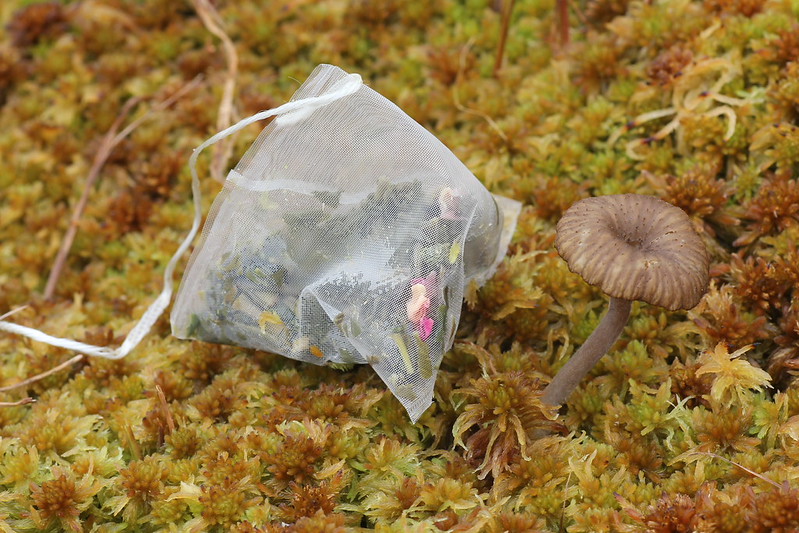
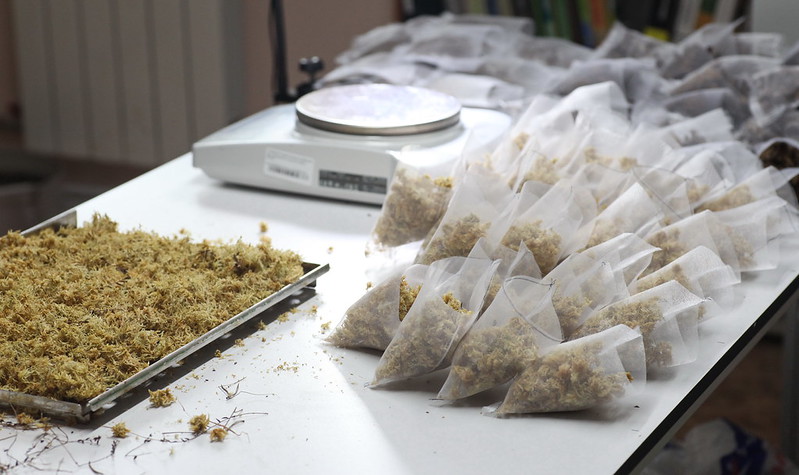
- Results from long-term monitoring of organic matter decomposition rates at the «Mukhrino» field station were analyzed and integrated into the project context. These independent data, obtained by standardized methods (Tea Bag Index, litter bags), serve as a quantitative basis for extrapolating and verifying future laboratory experiments.
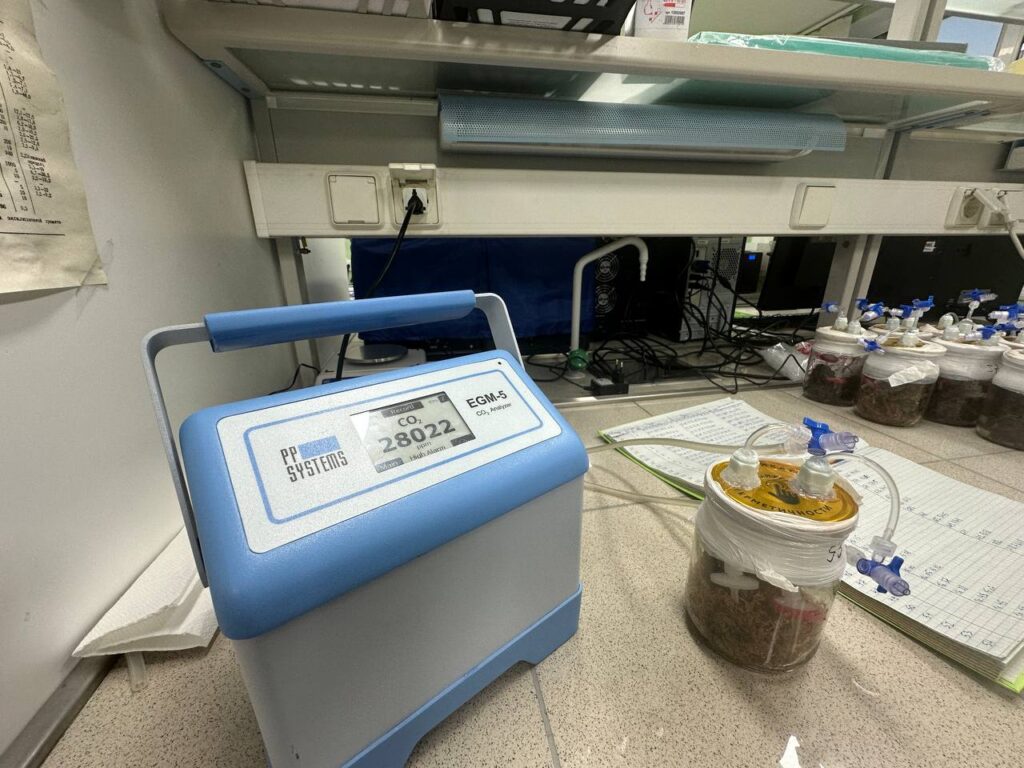
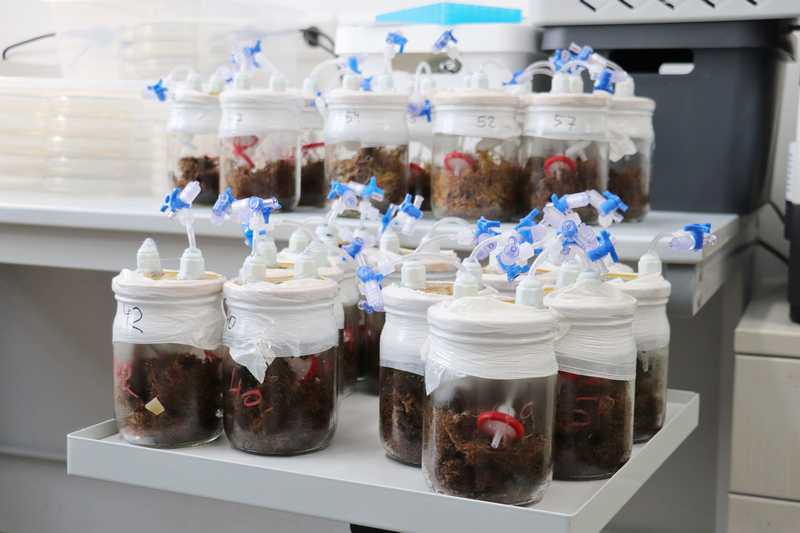
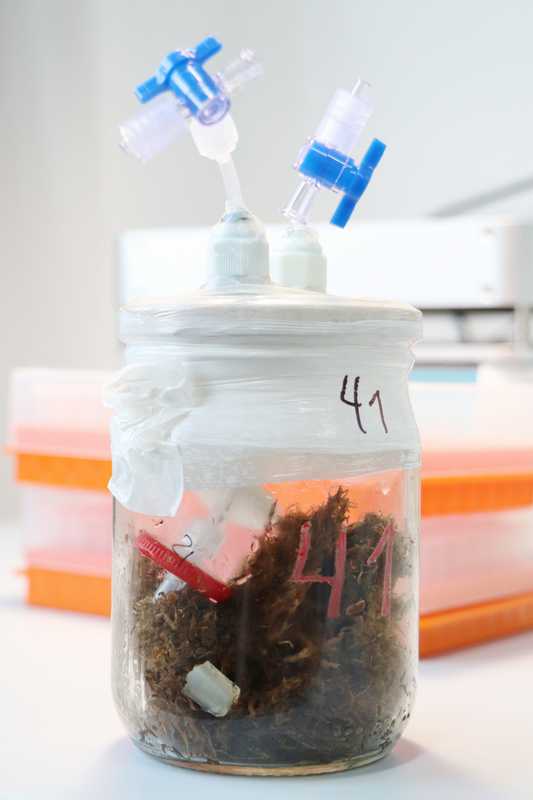
Completion of Preparatory Work for Quantitative Fungal Biomass Assessment. Peat samples were collected and preserved for subsequent ergosterol analysis upon equipment delivery. A preliminary field experiment to estimate mycorrhizal fungal biomass using the in-growth sand bag method was conducted, with samples preserved for future molecular analysis.
Despite logistical challenges, the first project year was dedicated to building a solid research foundation. The results obtained—a large-scale fungal biodiversity database, a living culture collection, and initiated long-term experiments—create the basis for transitioning to the second phase. This will enable us to directly link the structure of the identified fungal communities to their specific contribution to decomposition processes and the carbon cycle in one of Russia’s key ecosystems: the raised bogs of Western Siberia.
Project Information
- Fungal Community Dataset on GBIF: https://doi.org/10.15468/s2pkfk
- Decomposition Dynamics Dataset on GBIF: https://doi.org/10.15468/m4gvmb
- Read Archive in NCBI SRA: https://www.ncbi.nlm.nih.gov/bioproject/PRJNA1007262
List of Published Works
- Schwieger S. et al. (incl. Filippova N.V.), 2025. Environmental conditions modulate warming effects on plant litter decomposition globally // Ecology Letters, 28(1). http://dx.doi.org/10.1111/ele.70026
- Filippova N.V., Zvyagina E.A., 2025. Analysis of the composition and structure of a raised bog fungal community based on metabarcoding data // Modern Mycology in Russia. – Vol. 11. Proceedings of the Memorial Mycological Conference. Moscow: National Academy of Mycology, pp. 113-116.
- Filippova N.V., Zvyagina E.A., Ishmanov T.F., Mingalimova A.I., 2025. Integrating classical and molecular approaches to uncover fungal diversity and its drivers in a raised peat bog in northern West Siberia // Metabarcoding and Metagenomics [submitted].
- Filippova N.V., Bulyonkova T.M., Zvyagina E.A., Ageev A.D., Rudykina E.A., 2025. Cortinarius barcoding database of Western Siberia and adjacent areas // Biodiversity Data Journal [submitted].
This work is supported by the Russian Science Foundation grant «Conducting fundamental scientific research and exploratory scientific research by small individual scientific groups» (regional competition) for the scientific project: «The Role of Fungi in the Carbon Cycle of Raised Bogs: Linking Community Composition and Organic Matter Decomposition Process» (agreement No. 5-24-20145; regional 06/25.0021).
Last update 16/01/2026