Developing Native Mycorrhizal Preparations for Sustainable Forestry
The project is built on an integrated framework combining traditional mycological methods with biotechnology and open science principles. Key goals:
- From Science to Solution: developing protocols for mass mycelium cultivation as the critical step towards creating a market-ready bio-preparation.
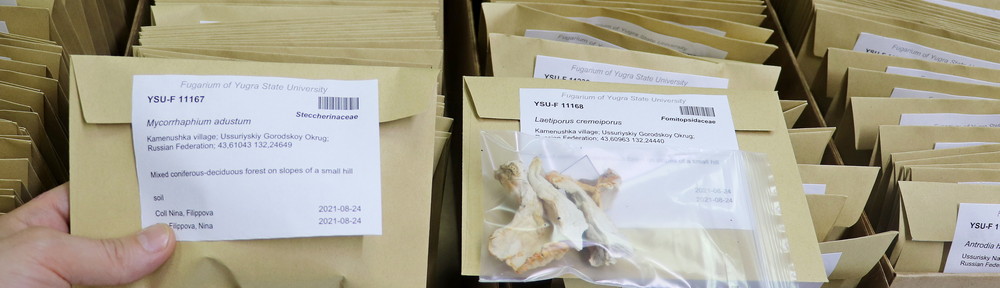
- Building a Unique Biological Resource: creating a live collection of native ectomycorrhizal fungal strains.
- Advanced Genetic Identification: utilizing Sanger and Nanopore sequencing for precise species verification and metabarcoding for community analysis.
- Controlled Efficacy Testing: developing sterile in vitro systems (rhizotrons) to screen fungal strains for symbiotic effectiveness.
- Open-Access Data Management: cataloging all research outputs in a specialized digital database and publishing them on global platforms like GBIF.
Methodology and 2025 Key Milestones
1. Preparatory & Organizational Phase (Jan – May 2025)
- Conducted a comprehensive analysis of over 120 scientific publications and manuals on mycorrhizal ecology and cultivation techniques, forming a specialized digital library.
- Developed a target checklist of ectomycorrhizal fungi species significant for the key tree species of the Tyumen region (pine, cedar, larch, birch).
- Acquired specialized equipment and reagents. Mastered the preparation of 5 different nutrient media types suitable for cultivating a wide range of mycorrhizal fungi.
2. Fieldwork & Strain Collection (June – Sept 2025)
- Fieldwork was concentrated around Khanty-Mansiysk to intensively refine collection and isolation methodologies.
- Conducted 17 field trips, collecting and documenting 679 fungal fruit body samples.
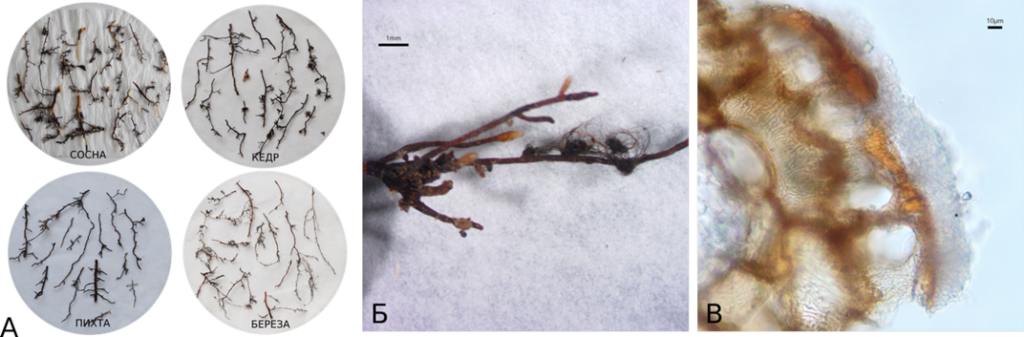
- A repeatable protocol for isolating pure cultures from fruit body tissue was perfected. Successful isolation from root tips was also achieved later in the season.
- Initiated a pilot study using «in-growth mesh bags» to estimate fungal biomass in soil, with samples collected for future metabarcoding analysis.
3. Laboratory Processing & Characterization (Oct – Dec 2025)
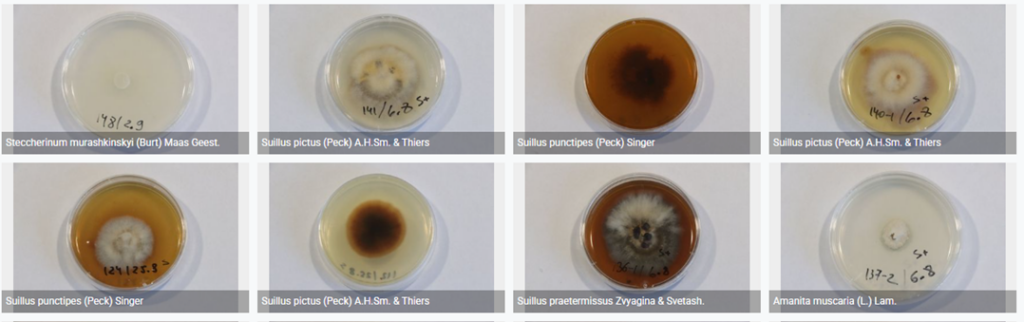
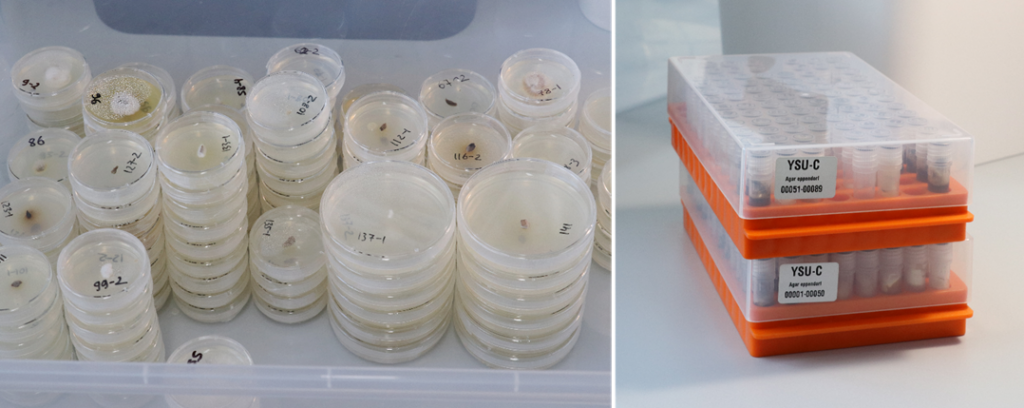
- Established a live collection of 82 verified pure culture strains of ectomycorrhizal fungi, representing about 30 species from 7 genera (e.g., Suillus, Amanita, Laccaria).
- Each strain was morphologically described, and its growth rate measured. Species identity was confirmed via Sanger sequencing of the ITS region.
- Created the specialized «YSU-C» module within the Yugra State University collection database to manage all strain data, including origin, morphology, sequences, and photos.
- The entire collection was published as an open dataset on the GBIF portal, making it accessible to the global scientific community.
4. Development of Mycorrhization Experiments (In Vitro)
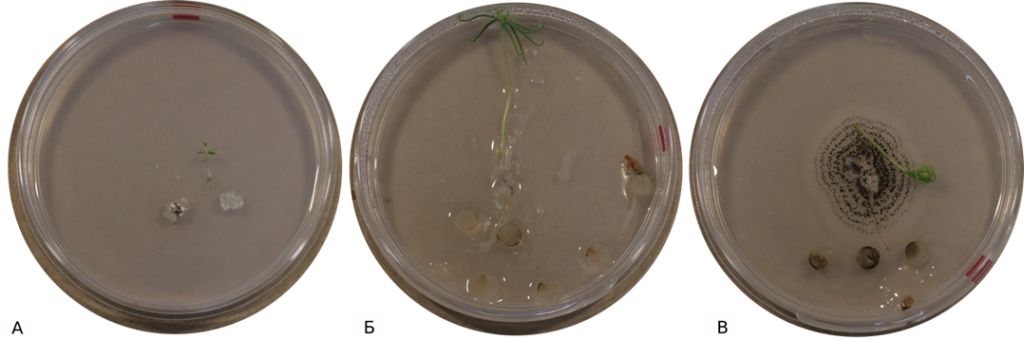
- Developed methods for sterilizing, stratifying, and germinating seeds of Siberian pine, Scots pine, and Siberian larch under sterile conditions.
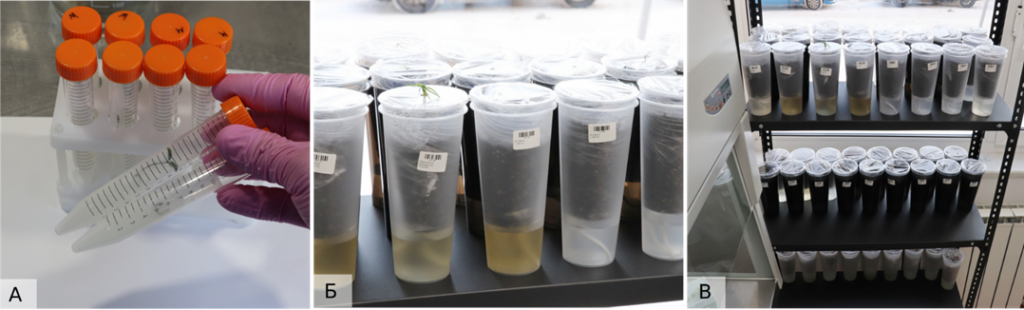
- After testing various containers and substrates, an optimal system using wicking cups with a peat-vermiculite mixture was established for observing root-fungus interaction.
- A dedicated laboratory setup with controlled lighting was created. Currently, 75 experimental rhizotron units are active, with a target of 150 to ensure statistical reliability for screening strain effectiveness.
5. Experiments for Future Preparation Development
- Initiated experiments on mass mycelium cultivation on solid sterile carriers (e.g., peat, vermiculite mixtures) in various containers, laying the groundwork for formulation development.
Key Achievements and Scientific Results (2025)
- Created a unique, fully characterized collection of 82 native ectomycorrhizal fungal strains—a vital resource for biotechnology development in Yugra.
- Developed and implemented the «YSU-C» digital platform, with data published openly on GBIF in accordance with FAIR principles.
- Successfully developed and implemented a sterile rhizotron system for in vitro efficacy testing of fungal strains, a crucial tool for the project’s next stages.
- Processed and published two metabarcoding datasets on fungal communities in peatlands and forests of the region, with a scientific article under review.
Publications, Outreach, and Impact
- Scientific Output: 4 articles published in peer-reviewed journals (Web of Science/Scopus), 1 software certificate registered, and 3 datasets published on GBIF.
- Community Engagement: project results were presented at 9 scientific events. Two workshops and a public exhibition were held to popularize knowledge about mycorrhiza.
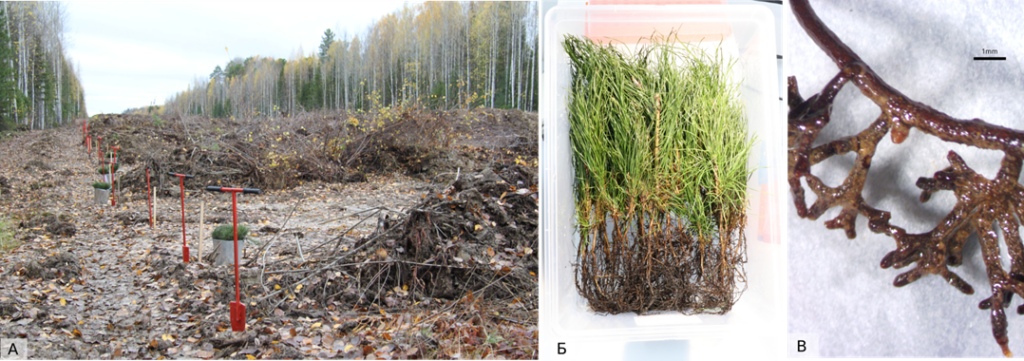
- Practical Significance: enhancing reforestation and seedling survival in Western Siberia; contributing to climate projects through increased forest carbon sequestration.
Links & Resources:
- Fungal Culture Collection dataset on GBIF: https://doi.org/10.15468/2jgt8u
- YSU Biological Collection Database: http://specify.ugrasu.ru/
- Presentation of Mycorrhizal Preparation for technology startup accelerator (pdf).
- Materials of research seminar on ECM culture collection: video part 1, video part 2, presentation pdf.
The research team expresses its sincere gratitude to the Foundation for Scientific and Technological Development of Yugra for its support and the opportunity to realize this project. Работа ведется в рамках реализации Соглашения № 2024-514-04 «Разработка микоризных препаратов для увеличения приживаемости древесных пород для биоремедиации и реализации климатических проектов»
Publications
- Филиппова НВ, Звягина ЕА, Мингалимова АИ, 2025. Баркодинг коллекции образцов и культур грибов на севере западной сибири: протоколы молекулярной работы, хранения и публикации данных // Микробные симбиозы в природных и экспериментальных экосистемах. Материалы научных докладов Пятой всероссийской молодежной школы-конференции с международным участием. Оренбург, ИКВС УрО РАН, 2025
- Филиппова НВ, и др. 2025. Промежуточный отчет по проекту № _2024-514-04 (рукопись). Скачать в Pdf
Last update 2026/02/26